The Oldest Form of Knowledge Is the One AI Cannot Read
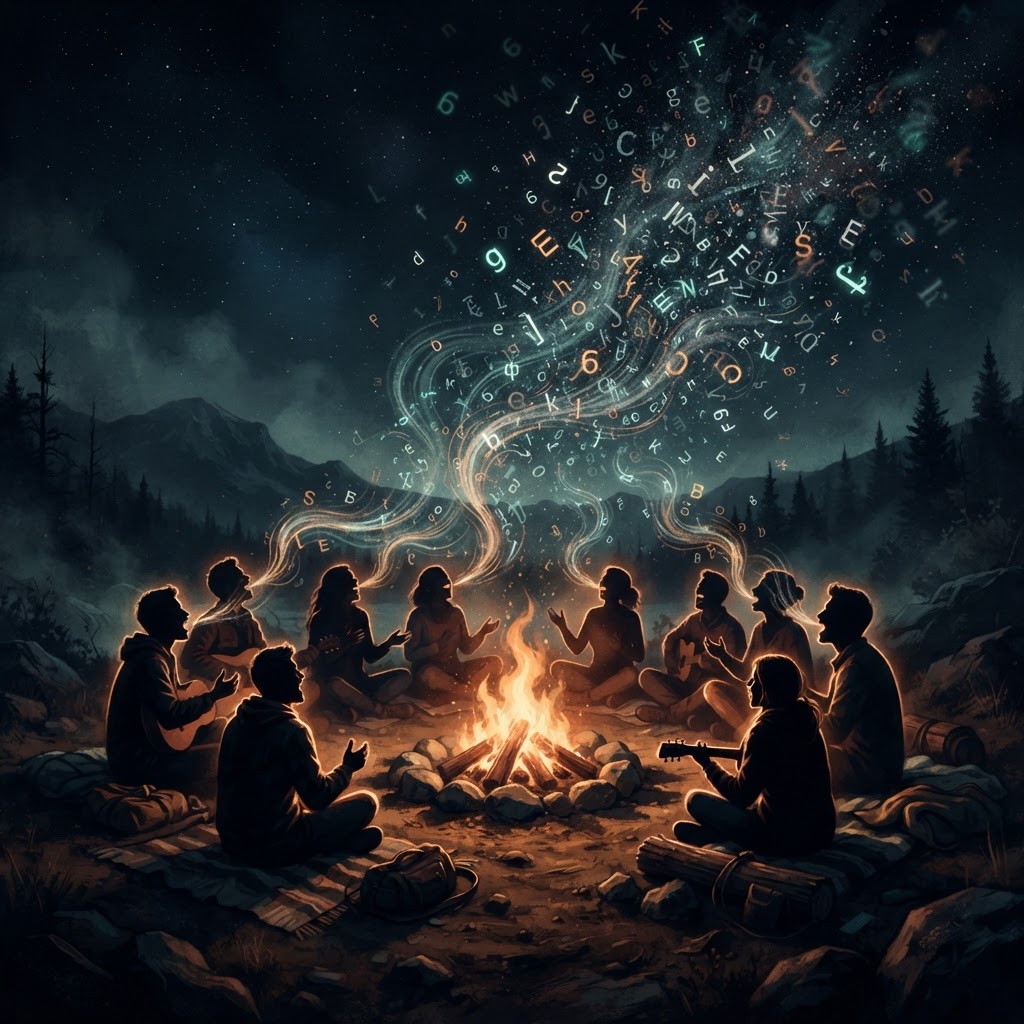
Before there were books, there were voices. Before there were databases, there were grandmothers. For thousands of years, the deepest knowledge of countless cultures — origin stories, medicinal practices, genealogies, agricultural wisdom, legal codes, and spiritual cosmologies — lived not on pages but in the mouths and memories of people. Songs carried history. Dances encoded law. Ceremonies preserved science.
These oral traditions are not inferior to written records. They are simply structured differently — carried through performance, repetition, and communal memory rather than static text. They are living, breathing, and adaptive by design.
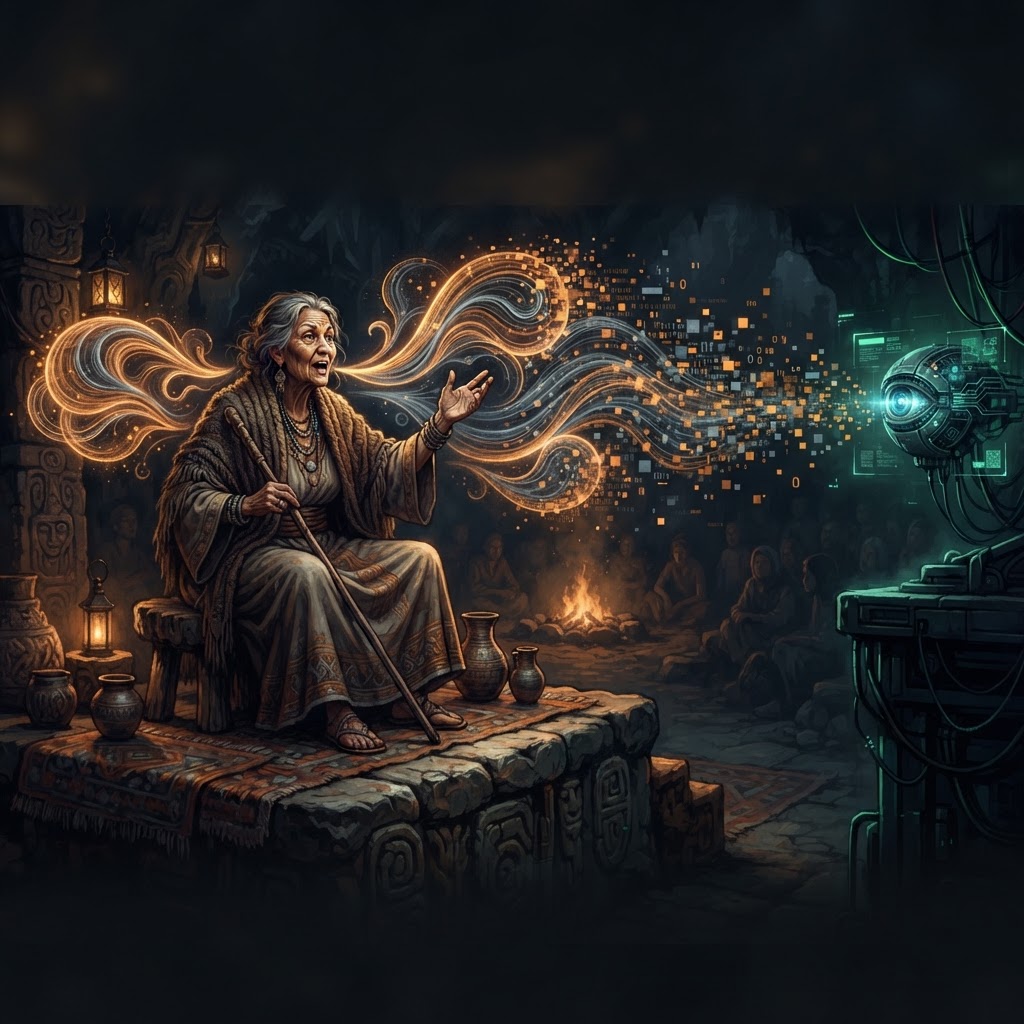
But AI systems do not breathe. They read.
Every large language model — from GPT to Gemini to Claude — is fundamentally a text-processing system. Its training data is text. Its retrieval pipeline queries text. Its generation engine produces text. If a piece of cultural knowledge has never been written down in a format that was crawled, indexed, and included in a training corpus, it does not exist in the AI's world.
That is not a minor gap. That is a structural blind spot that spans continents.
The Mathematics of Cultural Erasure
Consider the scale. UNESCO estimates that nearly half of the world's approximately 7,000 living languages are endangered. Many of these languages have little to no written representation online. No Wikipedia articles. No digitised books. No structured data. No schema markup.
When an AI model is asked about a festival from one of these communities, it has three options: say nothing, pull from a secondary source written by an outsider, or hallucinate. The first is honest silence. The second introduces distortion. The third is fabrication. None of them preserve the tradition on its own terms.
The compounding problem is that AI outputs are now feeding back into the web. Blog posts summarising AI answers are being crawled and re-ingested into future training data. If AI got a cultural practice wrong in 2024, that error is now becoming part of the 2026 training corpus — presented as fact, with no original source to contradict it.
This is how erasure accelerates. Not through malice, but through absence. The tradition that is not written down cannot be found. What cannot be found cannot be cited. What cannot be cited cannot be verified. What cannot be verified gets replaced — by something louder, something written, something that was never the tradition at all.
Why Writing It Down Is Necessary But Not Sufficient
The obvious response is: just write it down. And that is part of the answer. But it is not the whole answer, because the problem is not merely transcription. It is representation.
A festival is not just a date and a name. It is a sequence of movements, a set of songs, a protocol of who leads and who follows, a geography of where it happens and why, a cosmology of what it means. Writing the name and date captures the skeleton. The body — the living practice — requires structured, multimedia, contextual documentation that an AI system can actually parse.
This is where the Culture Visibility Engine comes in. Its mission is not simply to archive cultural content. It is to make cultural content findable by AI — to transform oral, performed, and lived traditions into structured representations that AI systems can discover, understand, and cite accurately.
A submission to the Culture Visibility Engine includes not just a description but semantic entities, knowledge graph relationships, and structured data. When a traditional festival is submitted, the system maps its practitioners, its geographic origin, its seasonal timing, its associated music and cuisine, and its relationship to broader cultural categories. This is what allows an AI model to not just name the festival but understand it in context.
The Partnership Layer
This work cannot happen in a vacuum. Cultural visibility requires trust, and trust requires partnership with the institutions and communities that own these traditions.
TSBOI's partnership with the Federal Ministry of Art, Culture, Tourism & Creative Economy (FMACTCE) provides exactly this foundation. It ensures that cultural submissions are not extracted or appropriated but are reviewed, verified, and published with institutional backing. Every culture submission is human-reviewed before going live in the Hub — because cultural knowledge deserves more care than an automated crawl.
The principle is simple: the community owns the tradition, the institution validates it, and the engine makes it findable. No step is skipped.
What Happens When a Tradition Becomes AI-Visible
When a cultural practice moves from oral-only to AI-visible, several things change at once.
First, it becomes citable. When a student in Lagos asks ChatGPT about a traditional festival, the model can draw on structured, verified data rather than hallucinating from fragments. When a researcher queries Perplexity about indigenous agricultural practices, they receive an answer grounded in human-reviewed sources rather than scraped tourism blogs.
Second, it becomes connectable. The knowledge graph that the Culture Visibility Engine builds links a festival to its region, its music to its instruments, its cuisine to its ingredients, its practitioners to their communities. AI systems can traverse these relationships and surface connections that even the communities themselves may not have seen mapped before.
Third, it becomes durable. Oral traditions are vulnerable to disruption — displacement, language loss, the passing of elders. Once structured and indexed, the representation persists. Not as a replacement for the living tradition, but as a record that the next generation — and the next AI — can find.
The Stakes Are Not Abstract
By 2030, it is estimated that AI-mediated search will be the primary way most people encounter new information — including information about cultures they have never heard of. If an AI system cannot find your tradition, it will not describe it accurately. If it cannot describe it accurately, it will describe something else instead.
The oral tradition blind spot is not a technical curiosity. It is a civilisational risk. The traditions that survive the AI era will be the ones that are findable. The ones that are not findable will be quietly, systematically replaced — not by censorship, but by silence.
Making important things findable is not just about businesses and brands. It is about the songs, the ceremonies, the stories, and the knowledge that define who we are. The Engine Never Sleeps — and neither should the effort to ensure that no tradition disappears simply because it was never written down for a machine to read.
Submit a cultural tradition to the Culture Visibility Engine at tsboi.ai. Free submissions. Human-reviewed. Built to last.