The Hallucinated Heritage: When AI Invents Your Culture
When AI systems can't find authentic cultural data, they don't stay silent — they synthesize. The result is hallucinated heritage: plausible, confident, and wrong. Here's how to stop it.
By TSBOI AI Editorial
When an AI system doesn't know something, it doesn't stay silent. It fills the gap.
This is the fundamental problem facing every culture, tradition, and heritage practice that hasn't been digitally documented. Not the kind of "documented" that means a Wikipedia stub or a tourism board paragraph — the kind that includes context, meaning, methodology, oral history, and the living practice itself. When that depth is absent, AI systems don't leave a blank. They generate. And what they generate is often wrong, always confident, and increasingly treated as authoritative.
This is hallucinated heritage — the cultural equivalent of the entity vacuum, but with higher stakes. Because when AI invents a business's competitor, a business loses revenue. When AI invents a culture's tradition, a people lose their heritage.
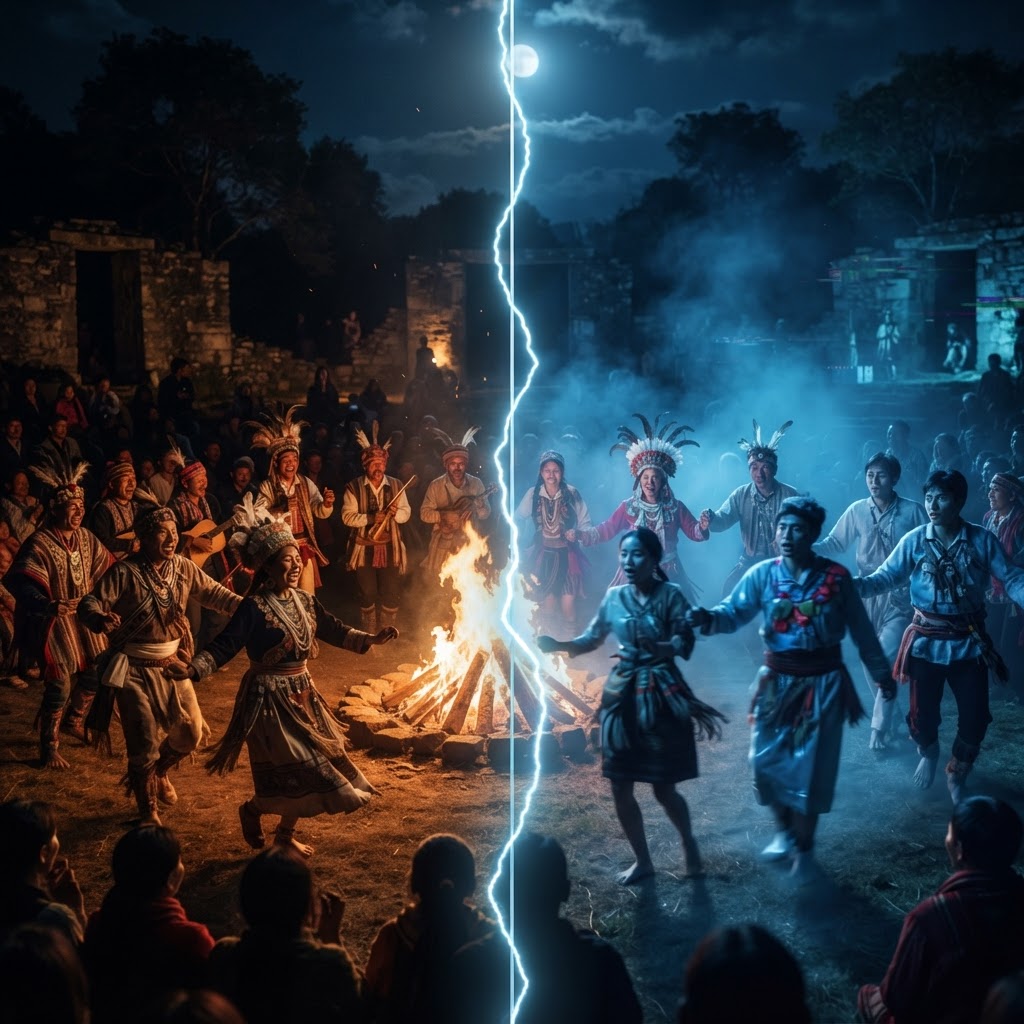
The Confidence Gap
Here's how it works in practice. An AI system is asked about a festival, a cuisine, a form of music, or a folklore tradition. It searches its training data and retrieval pipeline. If it finds rich, corroborated, structured information, it cites real sources and accurately reflects the culture. If it finds nothing — or finds only thin, fragmented, or tourism-oriented content — it doesn't say "I don't know." It synthesizes. It takes fragments from adjacent cultures, fills in plausible details, and presents the result with the same confidence it would use to describe a globally documented event.
The gap between what AI knows well and what it hallucinates is not random. It tracks precisely along the lines of digital documentation. Cultures with extensive English-language coverage, structured databases, academic papers, and cross-referenced sources are represented accurately. Cultures that exist primarily in oral tradition, in local languages, in practice rather than text, are the ones that get invented.
The Amplification Loop
Hallucinated heritage doesn't stop at the first generation. When an AI system generates a plausible but inaccurate description of a cultural practice, that output gets published — in blog posts, in student essays, in tourism materials, in AI-generated content that floods the web. Other AI systems then crawl that content, treat it as a source, and cite it. The hallucination becomes corroboration. The invention becomes tradition.
This is the amplification loop: absence breeds hallucination, hallucination breeds content, content breeds citation, citation breeds authority. Each cycle makes the original, authentic cultural practice harder to find — because the AI-generated version is now more prevalent than the real one.
The longer this loop runs unchecked, the harder it becomes to reverse. After enough iterations, the hallucinated version has more web presence, more backlinks, and more structured data than the authentic practice ever did. The real tradition becomes the one that sounds wrong.
What AI Gets Wrong
The distortions are specific and structural. AI systems tend to:
- Merge distinct traditions from neighbouring cultures into a composite that belongs to no one.
- Prioritize aesthetic or exoticized descriptions over functional, lived practice.
- Flatten complex ceremonies into tourism-friendly summaries.
- Assign cultural practices to the wrong ethnic group or geography.
- Invent origins and meanings that sound plausible but have no basis in the actual tradition.
These aren't minor errors. They're structural misrepresentations that, once amplified, become the dominant narrative about a culture — drowning out the voices of the people who actually live it.
The Solution Is Not More Content — It's Structured Cultural Data
The response to hallucinated heritage isn't to flood the web with more articles. It's to ensure that authentic, human-reviewed, structured cultural data exists in formats that AI systems can discover, verify, and cite.
This is exactly what the Culture Visibility Engine was built to do. Through free submissions human-reviewed before going live in the Hub, the engine ensures that traditions, festivals, cuisine, music, dance, and folklore are documented with enough depth, context, and corroboration that AI systems cite the real thing — not a hallucination.
The partnership with the Federal Ministry of Art, Culture, Tourism & Creative Economy (FMACTCE) ensures that cultural submissions are not just published, but verified by people with genuine cultural authority before they reach AI systems. This isn't about volume. It's about accuracy at the point of entry — before the amplification loop can start.
What You Can Do
If you belong to a community whose traditions are underrepresented online, the most powerful thing you can do is not argue with AI chatbots about what they got wrong. It's to ensure the right data exists in the right format.
Submit your traditions to the Culture Visibility Engine. Document the context, not just the name. Include the meaning behind the practice, not just the performance. Provide the oral history alongside the description. Let the review process ensure accuracy. Then let the engine do what it does — make important things findable.
Because the choice is simple. Either we preserve culture for AI, or AI will invent it for us. And once a hallucination becomes the dominant version, the real tradition becomes the one that sounds wrong.
The engine never sleeps. Neither should the work of preserving what matters.